Reposted with permission from the Rocky Mountain Elk Foundation

Congress created the Equal Access to Justice Act to give everyday Americans a fair shot. But it’s been hijacked into a lawsuit factory where environmental groups fuel their agendas with taxpayer money.
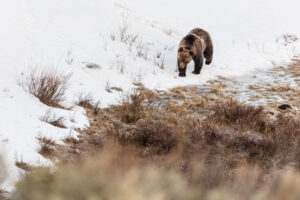
When the federal government listed grizzly bears as threatened in the Lower 48 under the newly minted Endangered Species Act (ESA) in 1975, an estimated 136 grizzlies remained in the nearly 6 million acre Greater Yellowstone Ecosystem (GYE). Since female grizzlies don’t reproduce until they’re at least four years old and only have litters of two to three cubs every three years or so, extinction loomed as a real possibility. Over time, though, those protections worked.
By 2007, U.S. Fish and Wildlife Service (USFWS) scientists estimated the GYE population had quadrupled to more than 500 bears and expanded its range by more than 50 percent. This exceeded all of the federal recovery criteria and the USFWS removed the Yellowstone grizzly population from threatened status. In short, the ESA functioned exactly as it was designed.
Of course, the story didn’t end there. Environmentalists immediately sued, citing uncertainty regarding food sources. A judge agreed and returned them to fully protected status.
Subsequent research showed that the bears adapted well, overcame the perceived food challenges and continued to grow in numbers and range. In 2017, citing an estimated population of 750 bears and further expansion of occupied range—again exceeding all delisting criteria—he Department of Interior removed grizzlies’ threatened species status once more, returning management of the great bears to the three state wildlife agencies in the Greater Yellowstone.
Once again, a slew of environmental groups took their arguments to court. In 2018, a federal judge cited technicalities and ordered the population be relisted again. The federal government and states of Idaho, Montana and Wyoming intervened on behalf of delisting, and the Rocky Mountain Elk Foundation and the Sportsmen’s Alliance Foundation filed a brief in support of delisting to the Ninth Circuit of Appeals. However, the court upheld the relisting decision in July 2020. In April 2021, biologists from both the USFWS and Interagency Grizzly Bear Committee revised the estimated grizzly population in the GYE to upwards of 1,000 bears. That’s almost a tenfold increase from where the population stood when they were listed as threatened 46 years ago.
The delist-relist ping-pong is frustrating enough. But here’s one more especially galling detail: you’re paying for it.
Citing the Equal Access to Justice Act (EAJA) in that most recent round of litigation, environmental groups filed requests to be reimbursed for “reasonable” attorney fees up to $460 an hour. A few of those groups include the Alliance for Wild Rockies, Center for Biological Diversity, Humane Society of the United States, Sierra Club and WildEarth Guardians. The total combined ask amounted to more than $1.4 million in taxpayer money.
“The really unfortunate thing is when these groups win, the Department of Justice negotiates the fees, but it’s the individual agency that must pay. So, in this case, it would impact the budgets of the U.S. Fish and Wildlife Service, but in other cases it could be the Forest Service, Bureau of Land Management or another federal agency,” said Blake Henning, RMEF chief conservation officer. “All of those agencies are already underfunded, and this just hurts them more, which means they don’t have staff to adequately review issues, which leads to more and more lawsuits. It’s become what amounts to a ridiculous, non-stop merry-go-round ride.”
Looting Agency Funding
Imagine discovering someone is picking your pocket without you even knowing about it. That scenario has played out time and time again in federal courts across the United States…….
